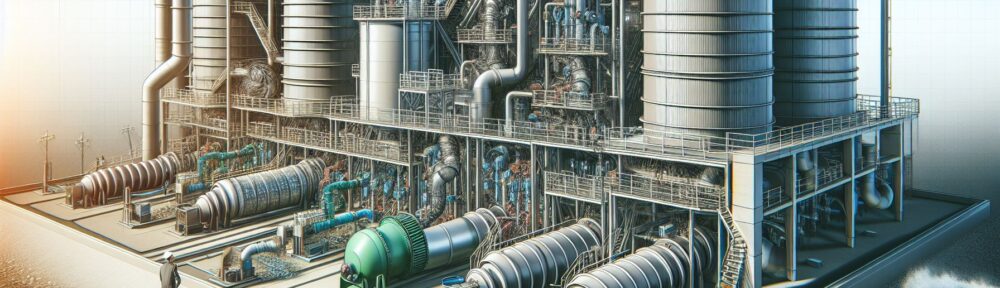
In the domain of waste management, distinct strategies and equipment types are essential. One such critical system is the gravity thickening system, used mainly in the management of municipal sludge.
What are Gravity Thickening Systems?
Gravity thickening systems take advantage of gravity’s natural pull to separate different parts of the waste. These systems rely on the difference in weight between sludge solids and water. The heavier sludge solids settle to the bottom, while the lighter water remains on top. To clarify, a gravity thickening system is a mechanism utilized to concentrate the sludge obtained during the waste treatment process.
The Role of Gravity Thickening Systems in Sludge Management
Sludge management involves comprehensive steps, from the collection of waste to processing and disposal. Between these stages, sludge thickening plays a paramount role. It aids in reducing the volume of the sludge, which in turn decreases the cost associated with sludge processing and disposal.
Gravity thickening is one method used to get the job done. Gravity thickening systems allow for the easy, cost-effective condensing of sludge. Introducing these systems into a waste treatment plan, therefore, can significantly aid in municipal sludge management.
How Gravity Thickening Systems Work
Whether in large, central wastewater treatment plants, smaller waste treatment facilities, or more recently, in decentralized wastewater systems, gravity thickening finds its use in a diverse set of environments.
At a high level, these systems operate on a relatively simple principle. At the outset, sludge is fed into a large tank or gravity thickener. The lower density water present in the sludge rises to the top. Simultaneously, the denser, heavier sludge solids reduce to the bottom of the tank. The clear water is then removed and moves further along in the treatment cycle, while the condensed sludge is paved towards additional treatment or disposal.
Advantages of Gravity Thickening Systems
Gravity thickening systems come with several advantages which affirm their position in sludge management. Their design is simple, which makes them easy to operate and maintain. A small, care-fully selected staff can run and manage the systems effectively.
They’re cost-effective, contributing positively to the reduction of capital and operational expenses. Improving sludge concentration helps limit the volume of sludge to be handled, thus reducing expenses linked to transportation and final disposal.
The use of these systems does not necessitate external heat or chemicals, which is beneficial from an environmental perspective.
Disadvantages of Gravity Thickening Systems
While gravity thickening systems provide many benefits, few disadvantages are also present. For instance, these systems require a moderate to significant amount of space, which might be an issue in heavily urbanized or densely populated areas.
Another disadvantage is that these systems might not yield the same results with all types of sludges. Some sludge types might not settle as effectively as others due to their unique physical properties. This characteristic may necessitate the use of additional treatment strategies.
Final Thoughts
To sum up, gravity thickening systems have a vital role in municipal sludge management. Their simple mechanism, cost-effectiveness, and environmental friendliness make them a preferred choice. Although they have a few limitations, their benefits generally outweigh their drawbacks. As urbanization continues to expand, and the requirement for effective waste treatment rises, the relevance of gravity thickening systems seems set to grow.